
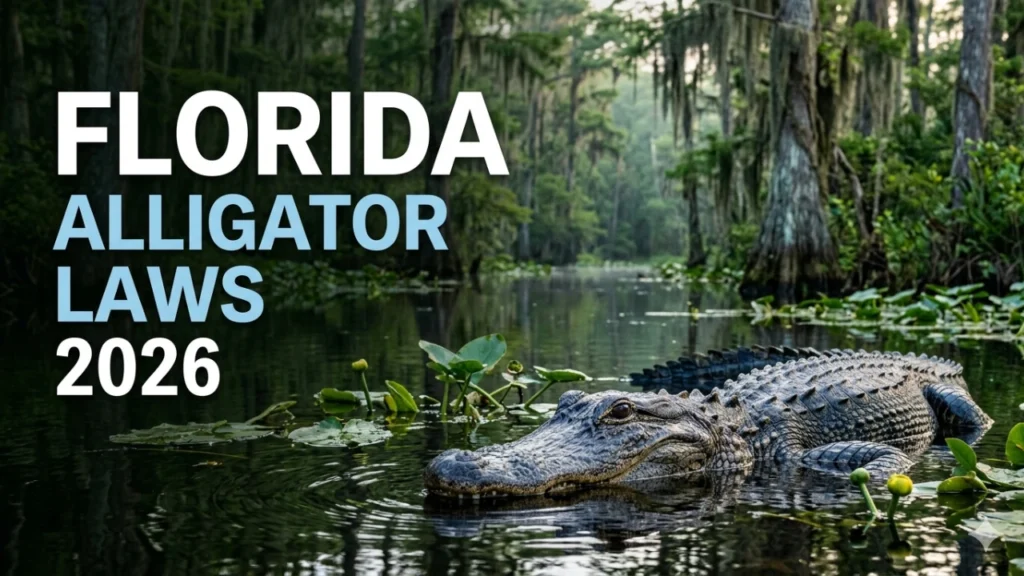
Florida is home to a large and healthy alligator population, and these reptiles live in all 67 counties across the state. That means understanding Florida alligator laws is not just useful for tourists. It matters for homeowners, pet owners, anglers, paddlers, and anyone who spends time near ponds, canals, lakes, marshes, or wetlands. The Florida Fish and Wildlife Conservation Commission says the state has about 1.3 million alligators, and they remain a normal part of life in many Florida communities.
For 2026, the most important thing to know is this: you cannot legally decide to handle an alligator problem on your own. Florida law and FWC guidance are built around public safety, wildlife protection, and controlled removal by authorized professionals. If you see an alligator near your home, the right next step depends on the situation, but trying to capture, relocate, injure, or kill it yourself can create serious legal and safety problems.
Why Florida alligator laws matter
Alligator laws exist to protect both people and wildlife. Florida’s official guidance makes it clear that serious injuries from alligators are rare, but the potential for conflict always exists. That is why the state combines legal protections, nuisance-animal response systems, public safety education, and regulated harvest programs.
This is especially important in neighborhoods with retention ponds, golf course lakes, drainage canals, and waterfront lots. In Florida, an alligator may be nearby even if you do not live in what most people would call “the wild.” That is one reason locals need current, practical information instead of vague rumors or outdated advice.
Is it legal to kill, capture, or move an alligator in Florida?
In general, no. Florida Statute 379.409 says a person may not intentionally kill, injure, possess, or capture an alligator or its eggs unless authorized by FWC rules. The related penalty section, 379.401, classifies that violation as a Level Four violation, and a Level Four violation is a third-degree felony. The statute also says equipment used in the violation may be confiscated.
That is the key legal point many blogs miss. This is not a DIY wildlife issue. Even if an alligator is on or near your property, that does not automatically give you the legal right to trap it, relocate it, or harm it. Florida uses licensed nuisance-alligator trappers and a formal complaint process for that.
What counts as a nuisance alligator?
FWC says an alligator is generally considered a nuisance if it is at least 4 feet long and the caller believes it poses a threat to people, pets, or property. If that standard is met, the Statewide Nuisance Alligator Program can dispatch a contracted nuisance alligator trapper.
At the same time, smaller alligators can still require removal in certain situations. FWC specifically notes that if an alligator under 4 feet ends up in a swimming pool, on a porch, or in a similar place, people should still call the nuisance hotline rather than handle it themselves. FWC also says you should never handle even a small alligator, because bites can cause serious infection and handling one is illegal.
Why relocation is not something the public should do
A lot of people assume the simple solution is to move an alligator somewhere else. FWC explains why that is not how the system works. Relocated alligators often try to return to the original site, which can create more danger along the way. FWC also notes that releasing a new alligator into an area with an existing population can cause fighting and other problems.
That is why Florida’s guidance is straightforward: if you are concerned about an alligator, call 866-FWC-GATOR (866-392-4286). Only a licensed nuisance alligator trapper may capture or remove one.
Is feeding alligators illegal in Florida?
Yes. FWC states that Florida Administrative Code 68A-25.001 prohibits feeding crocodilians, including alligators. FWC also warns that feeding alligators is dangerous because it teaches them to associate people with food, which can make them lose their natural wariness and increase the risk of future conflicts.
For locals, this law matters more than many people realize. Feeding does not only mean tossing food directly to an alligator. Unsafe behavior around shorelines, fish scraps, and deliberate attempts to attract wildlife can create long-term problems in residential areas and public recreation spots. The safest habit is simple: never feed an alligator and never encourage others to do it.
What Florida locals should do if they see an alligator
FWC’s everyday safety advice is very practical. Keep your distance if you see an alligator. Keep pets on a leash and away from the water’s edge. Swim only in designated swimming areas during daylight hours. These recommendations show up consistently in FWC’s public safety guidance because pets and shoreline activity are common factors in dangerous encounters.
In other words, not every alligator sighting is an emergency, but every sighting deserves caution. A calm, unprovoked alligator in a natural water body is not the same thing as an alligator lingering in a developed residential area, approaching pets, or showing up in a pool or garage. When there is a real concern, the hotline is the right move.
How legal alligator hunting works in Florida
Florida does allow regulated alligator harvest, but only through the state’s formal licensing and permit system. FWC’s hunt guide says the statewide recreational alligator hunting season runs from Aug. 15 through Nov. 8 each year, with the first four weeks assigned by harvest period and a later open period for hunters who still have unused tags.
FWC also says successful applicants receive an Alligator Trapping License, an area-specific harvest permit, and two CITES tags authorizing the harvest of two alligators. Applicants must be 18 years old by Aug. 15. FWC offers a free online harvest training and orientation course, but the hunt-preparation page says that training is not required by law.
That is exactly why broad statements like “everyone must complete mandatory education” can be misleading if they are not tied to current official wording.
What the latest alligator incident numbers show
FWC’s alligator-bite summary was updated in February 2026. It lists 13 unprovoked bites in 2025, including 2 fatal, and 11 unprovoked bites in 2024. Across the historical record in that same summary, FWC reports 500 unprovoked bites since 1948, including 32 fatal.
Those numbers support a balanced message for this blog: alligator attacks are not an everyday event, but they are serious enough that Florida residents should treat alligator laws and safety rules with respect. Good habits around shorelines, pets, and feeding make a real difference.
Final thoughts
If you live in Florida, the smartest way to think about alligator laws in 2026 is this: do not feed them, do not approach them, do not try to move them, and do not try to handle the problem yourself. Florida has a legal system in place for nuisance alligators, and that system exists for a reason.
Respecting wildlife is part of living responsibly in Florida. The goal is not fear. It is awareness. When locals know the rules, they are better prepared to protect their families, their pets, and the state’s natural ecosystems at the same time.
FAQs
Can I remove an alligator from my yard myself?
No. Only a licensed nuisance alligator trapper may capture or remove an alligator. FWC says people concerned about an alligator should call 866-FWC-GATOR.
What if the alligator is under 4 feet long?
FWC says smaller alligators are generally not considered dangerous unless handled, but if one is in a pool, on a porch, or in a similar place, you should still call the hotline and not handle it yourself.
Is feeding alligators illegal in Florida?
Yes. FWC says Florida Administrative Code 68A-25.001 prohibits feeding crocodilians, including alligators.
Can I legally hunt an alligator in Florida?
Only with the proper permit structure through FWC’s harvest program. The hunt guide says the statewide recreational season runs from Aug. 15 through Nov. 8, and successful applicants receive the required trapping license, permit, and tags.
Are alligator attacks common in Florida?
FWC says serious injuries are rare, but conflict is always possible. Its February 2026 bite summary shows 13 unprovoked bites in 2025 and 11 in 2024.

 ICONIER Digital Agency