
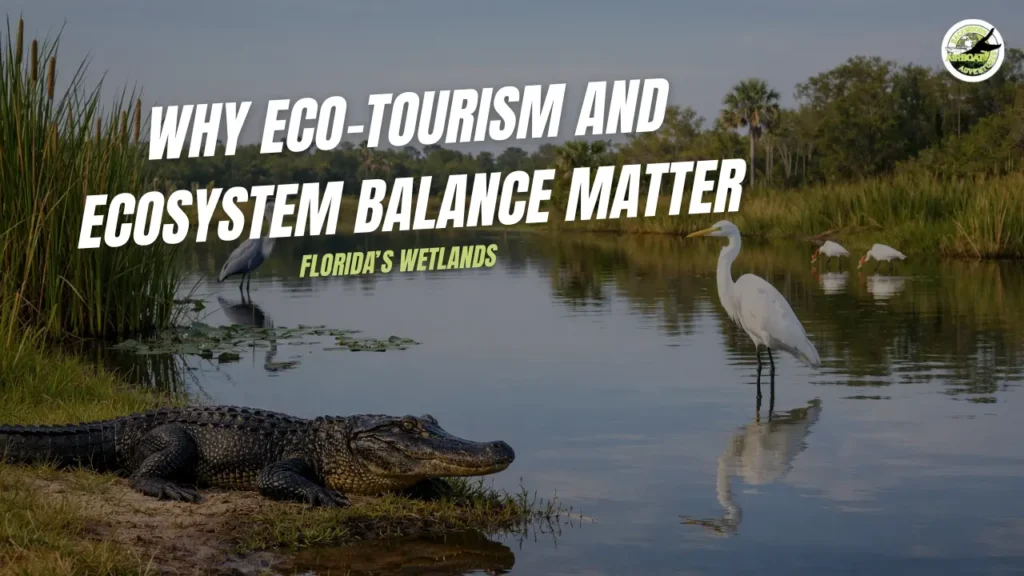
🌿 Florida’s Wetlands: A Living, Breathing Ecosystem
Florida’s wetlands are among the most biologically rich environments in North America. From the vast sawgrass prairies of the Everglades National Park to freshwater marshes and mangrove forests, these ecosystems support thousands of plant and animal species.
Wetlands act as:
- Natural water filtration systems
- Flood protection barriers
- Carbon storage reservoirs
- Wildlife nurseries
But beyond their beauty, wetlands are delicate systems that depend on ecological balance. When that balance is disrupted, wildlife, water quality, and even local communities are affected.
This is where eco-tourism plays a powerful role.
🐊 The Importance of Ecosystem Balance in Wetlands
Wetlands operate through carefully interconnected food webs.
For example:
- Native plants filter water and provide shelter.
- Insects feed fish and amphibians.
- Wading birds rely on fish populations.
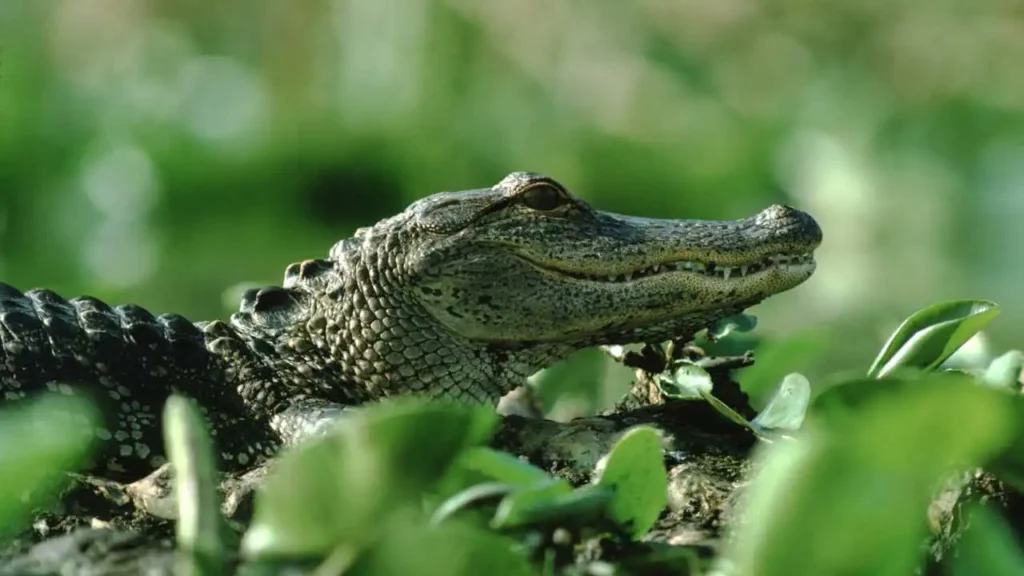
- Apex predators like the American alligator help regulate prey populations.
When predator-prey relationships stay balanced, biodiversity thrives. But if pollution, overdevelopment, or invasive species disrupt the system, consequences ripple outward:
- Fish populations decline
- Birds lose nesting grounds
- Water becomes contaminated
- Native plants are replaced
Balanced wetlands mean healthy wildlife—and healthy wildlife means a functioning ecosystem.
🌎 What Is Eco-Tourism?
Eco-tourism is responsible travel to natural areas that:
- Conserves the environment
- Supports local communities
- Educates visitors about ecosystems
- Minimizes environmental impact
Unlike mass tourism, eco-tourism focuses on preservation rather than exploitation. In Florida’s wetlands, this approach allows visitors to experience natural beauty while protecting it.
🚤 How Responsible Airboat Tours Support Conservation
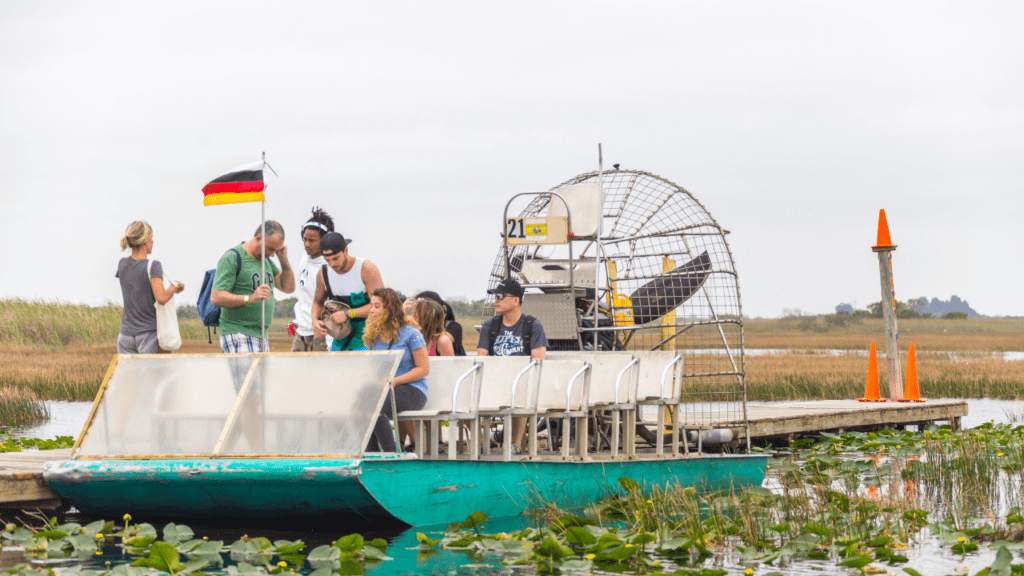
When conducted responsibly, airboat tours can be part of sustainable eco-tourism. Properly operated tours:
- Follow designated waterways
- Avoid disturbing nesting wildlife
- Educate guests about conservation
- Promote respect for fragile habitats
Businesses like Backwoods Airboat Adventures in Florida provide visitors with firsthand exposure to native wildlife and wetland ecosystems. Experiences like these often inspire guests to value conservation efforts more deeply.
Education is one of eco-tourism’s strongest conservation tools.
🐦 Protecting Biodiversity Through Awareness
Florida wetlands are home to:
- Wading birds
- Otters
- Turtles
- Native fish species
- Endangered wildlife
For example, the Florida panther depends on healthy wetland and forest ecosystems. Habitat destruction reduces available territory and food sources.
When visitors learn about these species during eco-tours, they better understand the importance of habitat protection. Awareness often translates into advocacy and support for conservation initiatives.
💧 Wetlands and Water Protection
Florida’s wetlands act as natural sponges. They:
- Absorb excess rainwater
- Reduce flooding
- Filter pollutants before water reaches rivers and oceans
If wetlands are drained or polluted, water quality declines—affecting wildlife, fisheries, and human communities alike.
Eco-tourism that respects natural boundaries helps prevent habitat degradation while creating economic value tied directly to preservation.
⚖️ Economic Benefits Without Environmental Damage
Sustainable eco-tourism provides:
✔ Local job creation
✔ Support for small businesses
✔ Incentives to protect natural habitats
✔ Long-term economic stability
When local economies depend on healthy ecosystems, conservation becomes a shared priority. Instead of replacing wetlands with development, communities benefit from keeping them intact.
In Florida, this balance between economy and ecology is essential.
🌱 The Threats Facing Florida’s Wetlands
Despite their importance, wetlands face serious challenges:
- Urban expansion
- Agricultural runoff
- Climate change
- Invasive species
- Water diversion projects
These pressures can destabilize ecosystems. Once balance is lost, recovery can take decades—or may not occur at all.
Responsible eco-tourism promotes a “protect what we enjoy” mindset, helping safeguard these fragile environments.
🌅 Why Eco-Tourism Matters for the Future
Eco-tourism connects people to nature in a meaningful way. Seeing wildlife in its natural habitat fosters appreciation that cannot be replicated in textbooks or photos.
When visitors witness:
- Alligators basking in the sun
- Birds soaring above marshlands
- The quiet beauty of untouched wetlands
They gain perspective on why ecosystem balance must be protected.
Florida’s wetlands are not just scenic landscapes—they are life-support systems for wildlife and communities.
🌿 Conclusion
Eco-tourism and ecosystem balance are deeply interconnected in Florida’s wetlands. Healthy ecosystems allow wildlife to thrive. Responsible tourism ensures those ecosystems remain intact for future generations.
By promoting conservation, education, and sustainable practices, eco-tourism transforms recreation into stewardship.
Protecting Florida’s wetlands means protecting biodiversity, water quality, local economies, and the natural heritage that makes the region truly unique.
When we explore responsibly, we preserve permanently.
 ICONIER Digital Agency